
Free tenant field guide
A clearer way to review your CAM charges.
The Tenant-First CAM Audit Checklist helps you compare your lease with an annual reconciliation, organize questions, and request the records that matter.
Instant PDF · No signup required · Your lease and records determine what applies
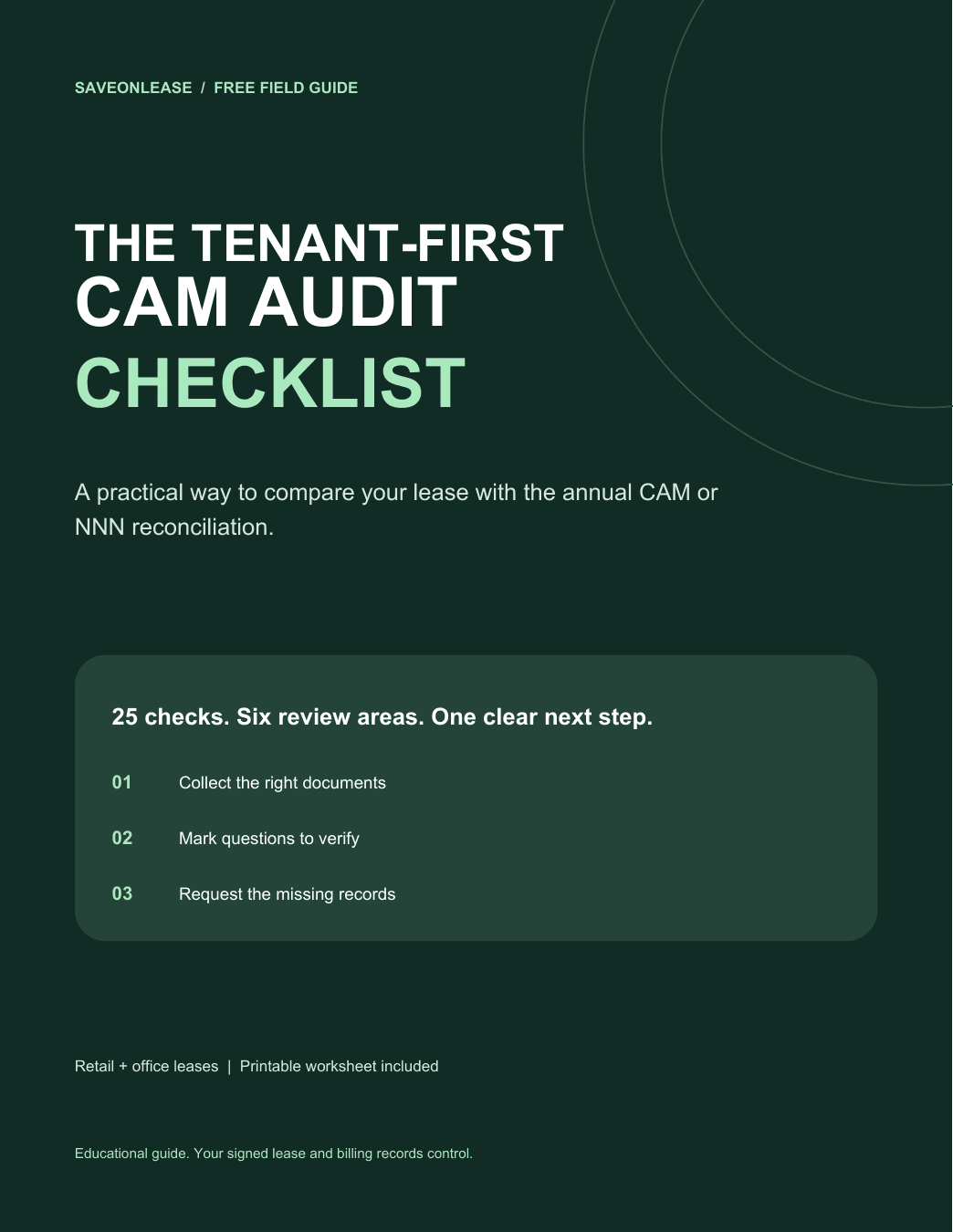
A preview of the actual guide
For tenant representatives
Review it with your clients.
Commercial brokers can share this checklist with clients reviewing CAM reconciliations. It gives you a consistent way to discuss fees, allocations, records, and lease-specific deadlines together.
What you can check in the guide
- ✓ Administrative & management fee review
- ✓ Capital expenditure classification
- ✓ Pro rata allocation verification
- ✓ Gross-up & vacancy distortion analysis
- ✓ Controllable vs. uncontrollable expense testing
- ✓ Year-over-year variance review methodology
- ✓ Audit window review
- ✓ A worksheet and records request draft
If you're new to CAM structures, you may also want to review our overview of Common Area Maintenance (CAM) and our guide to NNN (Triple Net) leases to understand how operating expenses are structured before applying this checklist.
Why a careful review matters
Rising insurance premiums, post-COVID vacancy shifts, operating volatility, and inflation in controllable expense categories have materially increased CAM variability.
Structural lease complexity combined with expense volatility increases the probability of misapplication — even in good-faith reconciliations.
A structured review helps you ask clearer questions and gather the records needed to verify a charge. Tenants reviewing CAM exposure should also understand how charges appear in practice within commercial real estate CAM structures and how allocation mechanics differ under triple net lease agreements. For a deeper breakdown of reconciliation mechanics, see our CAM reconciliation guide and our analysis of CAM vs. NNN lease structures.
Frequently Asked Questions
What is a CAM audit checklist in a commercial lease?
A CAM audit checklist is a structured framework commercial tenants use to review Common Area Maintenance (CAM) reconciliation charges for administrative overapplication, capital misclassification, pro rata allocation errors, and audit window exposure.
What are common CAM reconciliation errors in retail and office leases?
Common CAM reconciliation errors include management fee overapplication, capital expenses improperly passed through, pro rata share miscalculations, gross-up distortion during vacancy, and controllable expense cap violations. For a detailed explanation of how these errors appear in practice, review our CAM reconciliation breakdown.
Does the checklist calculate an overcharge?
No. It organizes questions and records to request. Any overcharge or recoverable amount depends on the lease and verified billing documents.
When should a tenant review CAM reconciliation charges?
Tenants should review CAM reconciliation charges immediately upon receipt, especially before contractual audit windows close. Most commercial leases limit dispute rights to a defined period after reconciliation delivery. Learn more about timing risks in our audit window deadlines guide.
What should I do if CAM charges increase significantly year over year?
If CAM charges increase materially year over year, tenants should review lease caps, allocation methodology, expense classifications, and audit window deadlines before accepting the reconciliation statement. You may also want to reference our CAM reconciliation checklist overview for a structured review sequence.
Continue your CAM & NNN lease research with these structured tenant-side guides.
Related CAM & NNN Guides
CAM Reconciliation Guide
Step-by-step breakdown of how CAM reconciliations are calculated, where errors occur, and how to review allocations.
Read Guide →Audit Window Deadlines
Understand 30, 60, and 90-day audit notice requirements and how missed deadlines eliminate dispute leverage.
Review Deadlines →CAM vs. NNN Explained
Compare CAM charges and Triple Net lease structures to understand how operating expenses are passed through.
Compare Structures →Before Your Audit Window Closes
Start with a free lease preview. Add an annual statement when you have it, then decide whether the full report will help you verify the questions raised.
Start a free lease preview ↗